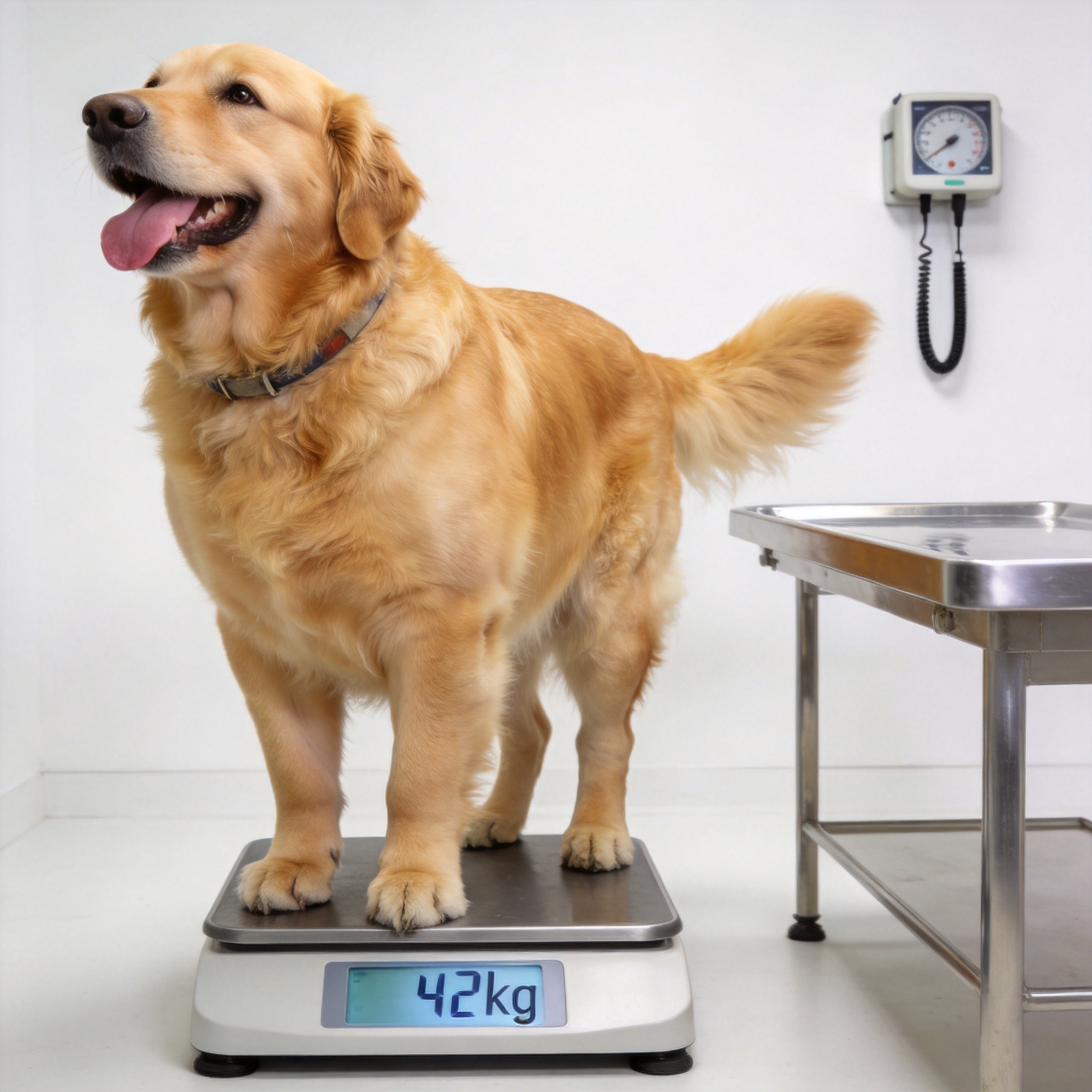
Let me share something that’ll make you reconsider that second helping of kibble you’re about to pour into your dog’s bowl.
According to the Association for Pet Obesity Prevention (APOP), roughly 59% of dogs and 61% of cats in the United States are currently overweight or obese. That’s not a typo—more than half of the pet population is clinically overweight. And here’s the kicker: about one-third of pet owners with an overweight pet genuinely believe their chunky companion is at a perfectly healthy weight.
I’ve seen this play out in exam rooms across the country. A client will bring in their Labrador, and when I mention the weight, they shrug and say, “Oh, he’s just big-boned.” Spoiler alert: there’s no such thing as big-boned. That “just a little extra” often translates to a shortened lifespan of 3-5 years and a dramatically reduced quality of life.
The Numbers Don’t Lie
Let’s break down what Banfield Pet Hospital found in their massive study tracking 4.9 million dogs and 1.3 million cats from 2020-2023:
- Young Adult Dogs: 24.4% overweight, 1.9% obese
- Adult Dogs: 44.5% overweight, 8.4% obese
- Mature Dogs: 50.1% overweight, 12.6% obese
- Senior Dogs: 46.4% overweight, 11.3% obese
The pattern is clear: by the time your dog hits adulthood, you’re basically flipping a coin on whether they’re at a healthy weight. And if they ARE overweight as an adult? The odds ratio jumps to 1.85—meaning that extra puppy fat has a statistically significant link to adult obesity.
Cats show an even grimmer picture. 47.2% of adult cats are overweight, and among mature cats (roughly 7-10 years old), that number hits 44.8% overweight and 21.7% obese. That’s more than one in five mature cats in the obese category.
The Health Consequences Are Brutal
Here’s where it gets serious. That cute little pooch belly isn’t just aesthetic—it’s actively destroying your pet’s organs from the inside.
Heart Disease: 4x the Risk
Excess adipose tissue wraps around the heart, causing myocardial strain. According to veterinary cardiology research, overweight pets have a four times higher risk of developing heart failure compared to their lean counterparts.
Diabetes: Especially for Cats
Feline diabetes rates are directly correlated with obesity. Overweight cats show 5x higher incidence of developing diabetes mellitus. Once diabetic, these cats typically require lifelong insulin injections—twice daily, with careful glucose monitoring.
Pancreatitis: The Hidden Danger
Here’s a stat that surprises people: 70% of pancreatitis cases in pets occur in obese individuals. And when pancreatitis hits acutely? The mortality rate exceeds 20%, even with aggressive treatment.
Which Breeds Are Most At Risk?
Not all pets are equally predisposed to weight gain. APOP and veterinary research have identified clear genetic patterns:
High-Risk Dog Breeds: Labrador Retrievers, Golden Retrievers, Cocker Spaniels, Dachshunds, Rottweilers, Beagles, and Mixed breed dogs.
High-Risk Cat Breeds: Mixed breed domestic cats, British Shorthairs, Norwegian Forest Cats, and Persian cats.
Labrador Retrievers are the poster children for this epidemic. Their genetic mutation in the POMC gene literally makes them feel hungrier than other dogs, driving them to overeat whenever given the chance.
Neutering: The Weight Gain Accelerant
Here’s something many owners don’t realize: neutering increases obesity risk by approximately 38% in dogs. After neutering, metabolic rate drops, appetite often increases, and without adjusting food portions, weight gain is virtually guaranteed.
A 2024 study found that 38% of neutered dogs were overweight or obese, compared to only 25% of intact dogs.
Why Weight Loss Is So Darn Hard
Here’s the truth nobody talks about: only 28% of dogs and 19% of cats that attempt weight loss actually reach a healthy body condition. That means roughly three out of four pets fail to lose the weight, even when their owners are actively trying.
Why? Three words: treat culture, inconsistency, and denial.
Sscience-Backed Weight Loss Strategies
Step 1: Calculate Accurate Calorie Needs
A typical adult dog needs approximately 25-30 calories per pound of body weight for maintenance. For a healthy 50-pound dog, that’s roughly 1,250-1,500 calories daily.
Step 2: Choose Weight Management Food
Diets specifically formulated for weight management use specialized fiber blends and protein-to-fat ratios that genuinely increase satiety.
Step 3: Replace Treats with Activities
Instead of cookies, reward good behavior with a brief game, extra cuddle time, or access to a favorite toy.
Step 4: Exercise—But Smart
For severely overweight pets, gradual exercise is critical. Start with 10-15 minute walks on flat terrain or swimming.
Step 5: Track Progress Objectively
Weigh your pet every 2 weeks. Target weight loss of 1-3% of body weight per week.
What I Wish Every Pet Owner Understood
I’ve been practicing veterinary medicine for over a decade, and I’ve seen what obesity does to pets. I’ve treated diabetic cats whose owners “didn’t know” they were overweight. I’ve performed surgery on obese dogs with torn cruciate ligaments. I’ve watched pets struggle to breathe, walk, and enjoy life because of entirely preventable obesity.
The love you show your pet isn’t measured in treats or table scraps. It’s measured in the years you’ll have together and the quality of those years.
Call to Action
This week, do these three things:
- Weigh your pet. Stand on your bathroom scale holding them, then subtract your weight.
- Look up Body Condition Score (BCS) charts. Check where your pet falls on the 1-9 scale.
- Calculate daily calorie needs and measure tomorrow’s food with an actual measuring cup.
One extra pound might not seem like much. But for your pet, that pound could be the difference between five more years of hiking adventures and five more years of limping to the food bowl.
Sources: Association for Pet Obesity Prevention (APOP) 2025 Clinical Survey; Banfield Pet Hospital State of Pet Health Report 2024; Purina Institute Obesity Monograph 2024